
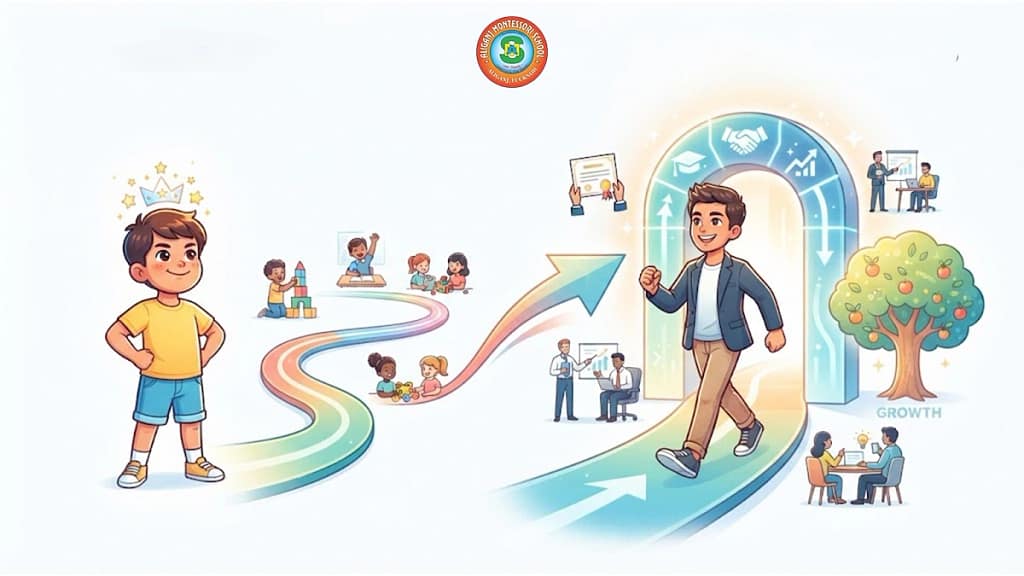

Early Childhood: Confidence is one of the most important gifts a child can develop during the early years of life. While parents often focus on academic learning, language skills, and physical growth, confidence acts as the foundation upon which all other abilities are built. A confident child is more likely to explore new ideas, communicate openly, overcome challenges, develop leadership qualities, and achieve success in school and beyond.
The first few years of a child’s life are crucial for personality development, emotional intelligence, social skills, and self-belief. Research consistently shows that children who develop confidence during early childhood are better prepared to handle academic pressures, social interactions, and future life challenges.
In today’s rapidly evolving world, success requires more than good grades. Future-ready learners need resilience, creativity, communication skills, adaptability, emotional intelligence, and independent thinking. These qualities are deeply connected to confidence.
At Aliganj Montessori School, we believe that confidence-building should begin from the earliest stages of education. As one of the trusted Montessori schools in Aliganj, Lucknow, and a leading CBSE school in Lucknow, we focus on holistic child development, experiential learning, and nurturing self-confidence through child-centered education.
Table of Contents
What Is Early Childhood Confidence?
Confidence is a child’s belief in their own abilities.
A confident child:
- Tries new activities
- Expresses opinions freely
- Learns from mistakes
- Interacts comfortably with others
- Faces challenges positively
Confidence is not about being perfect.
Instead, it is about believing:
- “I can learn.”
- “I can improve.”
- “I can try again.”
This mindset creates a strong foundation for future growth.
Why Early Childhood Is the Best Time to Build Confidence
The early years are a period of rapid brain development.
During this stage, children develop:
- Self-awareness
- Emotional intelligence
- Social skills
- Learning habits
- Communication abilities
Experiences during early childhood strongly influence how children see themselves.
Positive experiences help children develop:
- Self-belief
- Independence
- Curiosity
- Motivation
This is why early childhood education plays a critical role in confidence development.
Confidence Influences Academic Success
Many people assume academic success creates confidence.
In reality, confidence often comes first.
Confident children are more likely to:
- Participate in class
- Ask questions
- Explore new concepts
- Complete tasks independently
- Take healthy academic risks
When children believe they can learn, they become more engaged and motivated learners.
At Aliganj Montessori School, confidence-building is integrated into everyday learning experiences because confident learners often become successful learners.
Confidence Encourages Independent Learning
Independent learning is one of the most valuable future-ready skills.
Children who are confident:
- Trust their abilities
- Explore solutions independently
- Take initiative
- Solve problems creatively
Montessori education strongly supports independence because it helps children develop self-reliance and responsibility.
At Aliganj Montessori School, students are encouraged to make choices, complete tasks independently, and learn through exploration.
These experiences strengthen both confidence and critical thinking skills.
How Confidence Improves Social Skills
Confident children often find it easier to:
- Make friends
- Communicate effectively
- Participate in group activities
- Express emotions appropriately
Strong social skills contribute to:
- Positive classroom experiences
- Better teamwork
- Leadership development
Social confidence helps children build meaningful relationships and navigate social situations successfully.
Emotional Intelligence and Confidence Go Hand in Hand
Emotional intelligence is becoming one of the most important skills for future success.
Emotionally intelligent children can:
- Understand emotions
- Manage stress
- Build empathy
- Resolve conflicts
Confidence supports emotional intelligence by helping children:
- Express feelings openly
- Handle challenges calmly
- Recover from setbacks
Future education systems increasingly recognize emotional intelligence as a key component of holistic development.
Confidence Helps Children Embrace Challenges
Every child faces challenges.
Examples include:
- Learning new concepts
- Participating in competitions
- Making new friends
- Adjusting to new environments
Confident children view challenges as opportunities to grow rather than reasons to quit.
They are more likely to:
- Try again after failure
- Seek solutions
- Stay motivated
Resilience and confidence work together to support lifelong success.
Why Confidence Is More Important Than Perfection
Many children develop fear of failure because they believe they must be perfect.
This mindset can lead to:
- Anxiety
- Low self-esteem
- Avoidance of challenges
Confidence teaches children that mistakes are part of learning.
Children become willing to:
- Experiment
- Explore
- Take risks
- Learn from experiences
At Aliganj Montessori School, mistakes are viewed as valuable learning opportunities rather than failures.
Confidence Supports Leadership Development
Future leaders need confidence.
Leadership requires:
- Communication skills
- Decision-making abilities
- Responsibility
- Initiative
Children who believe in themselves are more likely to:
- Take leadership roles
- Share ideas
- Inspire others
Leadership development begins in childhood through opportunities for participation, collaboration, and independent thinking.
The Connection Between Confidence and Creativity
Creativity thrives when children feel confident.
Confident children are more willing to:
- Share ideas
- Experiment
- Think differently
- Solve problems creatively
Creativity is becoming increasingly important in future careers and education systems.
At Aliganj Montessori School, creative learning experiences encourage children to express themselves and build self-confidence naturally.
How Montessori Education Builds Confidence
Montessori education is designed to foster confidence through:
Independence
Children are encouraged to complete tasks independently.
Choice
Students are given opportunities to make decisions.
Exploration
Learning happens through hands-on experiences.
Respect
Children are treated as capable individuals.
Self-Paced Learning
Students progress according to their developmental readiness.
These principles help children develop genuine confidence rather than dependence on external validation.
The Role of Parents in Building Confidence
Parents play a crucial role in confidence development.
Children gain confidence when parents:
- Encourage effort
- Listen actively
- Celebrate achievements
- Allow independence
- Offer emotional support
Simple actions can make a significant difference.
Examples include:
- Praising persistence
- Encouraging problem-solving
- Allowing age-appropriate choices
Positive parenting helps children develop strong self-belief.
Why Encouragement Matters More Than Praise
While praise can be helpful, encouragement focuses on effort rather than outcomes.
Instead of saying:
“You’re so smart.”
Try saying:
“You worked really hard on that.”
Encouragement teaches children that success comes from:
- Persistence
- Learning
- Improvement
This mindset promotes long-term confidence and resilience.
Confidence and Future Career Success
The future workplace values:
- Communication
- Adaptability
- Leadership
- Problem-solving
- Emotional intelligence
All these skills are strengthened by confidence.
Confident individuals are more likely to:
- Pursue opportunities
- Handle challenges
- Collaborate effectively
- Continue learning
Early confidence becomes a powerful asset throughout life.
The Impact of Experiential Learning on Confidence
Experiential learning allows children to learn through:
- Hands-on activities
- Projects
- Exploration
- Real-world experiences
This approach helps children:
- Build competence
- Solve problems
- Gain practical skills
As children master new tasks, their confidence naturally grows.
At Aliganj Montessori School, experiential learning plays a key role in holistic child development.
Why Confidence Matters More in the Digital Age
Today’s children face:
- Constant comparison on social media
- Academic competition
- Information overload
- Rapid technological changes
Confidence helps children:
- Maintain self-esteem
- Make independent decisions
- Navigate challenges positively
Future-ready education must focus on helping children develop inner confidence rather than relying solely on external validation.
Building Confidence Through Positive School Experiences
Schools play an important role in confidence development.
Supportive learning environments help children:
- Feel valued
- Participate actively
- Develop friendships
- Explore interests
At Aliganj Montessori School, confidence-building is woven into:
- Classroom activities
- Leadership opportunities
- Experiential learning
- Creative exploration
Students are encouraged to become active participants in their own learning journeys.
How Aliganj Montessori School Nurtures Confident Learners
As one of the leading Montessori and CBSE schools in Lucknow, Aliganj Montessori School focuses on:
- Holistic development
- Child-centered learning
- Emotional intelligence
- Independent thinking
- Future-ready education
Our approach helps children:
- Build self-confidence
- Develop resilience
- Improve communication skills
- Become lifelong learners
By creating supportive and engaging learning environments, we help students discover their strengths and believe in their potential.
Conclusion
Confidence developed during early childhood has a lasting impact on every aspect of a child’s life. It influences academic achievement, social skills, emotional intelligence, leadership development, creativity, and future career success. Children who believe in themselves are more willing to explore opportunities, embrace challenges, and continue learning throughout life.
At Aliganj Montessori School, we understand that confidence is not simply a personality trait—it is a skill that can be nurtured through positive experiences, supportive relationships, Montessori education, and holistic development. By helping children build confidence from an early age, we prepare them not only for school success but also for a lifetime of achievement and personal growth.
A confident child today becomes a capable, resilient, and successful adult tomorrow.
Frequently Asked Questions
Why is confidence important during early childhood?
Confidence helps children develop independence, communication skills, resilience, and a positive attitude toward learning.
How does confidence affect academic performance?
Confident children are more likely to participate in class, ask questions, take initiative, and persist through challenges.
What role do parents play in building confidence?
Parents can build confidence by encouraging effort, supporting independence, listening actively, and providing emotional support.
How does Montessori education help develop confidence?
Montessori education promotes independence, self-paced learning, decision-making, and hands-on experiences that strengthen self-belief.
Can confidence influence future career success?
Yes. Confidence supports leadership, communication, adaptability, and problem-solving skills that are highly valued in future careers.
How does Aliganj Montessori School support confidence building?
The school integrates confidence-building into its Montessori curriculum through experiential learning, holistic development, leadership opportunities, and child-centered education.
Looking for a school that nurtures confidence, creativity, independence, and future-ready skills?
Visit Aliganj Montessori School and discover how Montessori education helps children develop the confidence they need to succeed in school, life, and beyond.
Admissions Open for 2026 – Give Your Child the Confidence to Dream Big, Learn Fearlessly, and Achieve Greatness.