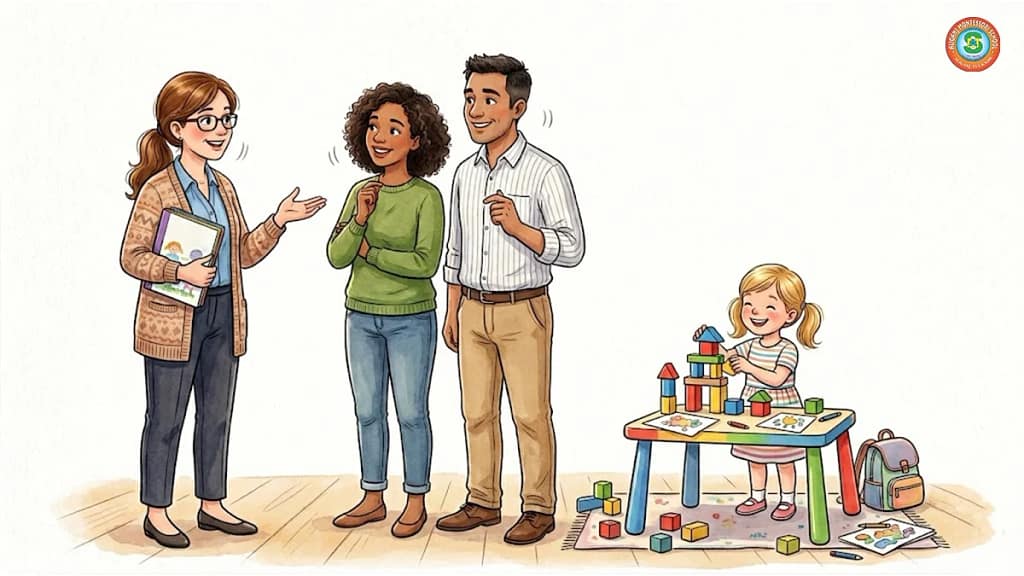

Parent-Teacher Partnership in Child Growth: A child’s education does not begin and end in the classroom. While schools provide knowledge, skills, and learning opportunities, parents play an equally important role in shaping a child’s personality, confidence, values, and overall development. When parents and teachers work together as partners, children receive consistent guidance, stronger support systems, and a more positive learning experience.
In today’s rapidly evolving education system, success is no longer measured solely by academic grades. Modern education focuses on holistic development, emotional intelligence, communication skills, critical thinking, creativity, and future-ready learning. Achieving these goals requires a strong connection between home and school.
A healthy parent-teacher partnership creates an environment where children feel supported, understood, and motivated to learn. It helps identify strengths, address challenges early, and ensure that every child receives the encouragement needed to reach their full potential.
At Aliganj Montessori School, we strongly believe that meaningful collaboration between parents and educators is essential for student success. As one of the trusted Montessori schools in Aliganj Lucknow and a respected CBSE school in Lucknow, we view parents as active partners in every child’s educational journey.
Table of Contents
Understanding Parent-Teacher Partnership
A parent-teacher partnership is a collaborative relationship where parents and educators work together to support a child’s learning, development, and well-being.
This partnership involves:
- Open communication
- Mutual respect
- Shared goals
- Regular feedback
- Collaborative problem-solving
- Active involvement in a child’s progress
When both sides work toward the same objective—the child’s success—the results are often remarkable.
Why Parent Involvement Matters in Education
Research consistently shows that children perform better when parents are actively involved in their education.
Benefits include:
- Higher academic achievement
- Better attendance
- Improved behavior
- Increased confidence
- Stronger social skills
- Greater motivation to learn
Children feel more secure when they see their parents and teachers working together.
This sense of support encourages them to:
- Participate actively
- Take responsibility
- Develop positive attitudes toward learning
Building a Strong Foundation for Academic Success
One of the most significant advantages of parent-teacher collaboration is improved academic performance.
When parents stay informed about:
- Classroom activities
- Learning objectives
- Homework expectations
- Academic progress
they can provide effective support at home.
Teachers gain valuable insights into:
- Learning styles
- Interests
- Strengths
- Challenges
Together, they can create personalized strategies that help children succeed academically.
At Aliganj Montessori School, regular communication ensures that parents remain actively engaged in their child’s educational journey.
Consistency Between Home and School
Children thrive when expectations are consistent.
When parents and teachers share common goals regarding:
- Behavior
- Discipline
- Study habits
- Social interactions
children receive clear and consistent guidance.
Consistency helps children:
- Develop responsibility
- Build self-discipline
- Understand expectations
- Feel secure
This alignment strengthens both academic and personal development.
Supporting Emotional Development
Academic success is closely connected to emotional well-being.
Children who feel emotionally supported often:
- Learn more effectively
- Build confidence
- Handle challenges better
- Develop resilience
When parents and teachers communicate regularly, they can identify:
- Emotional concerns
- Behavioral changes
- Social difficulties
- Confidence issues
Early intervention helps address problems before they affect learning and well-being.
At Aliganj Montessori School, emotional intelligence and holistic development are considered essential components of education.
Encouraging Positive Behavior
Behavioral development is a shared responsibility between home and school.
When parents and teachers work together:
- Expectations become clear
- Positive behaviors are reinforced
- Challenges are addressed consistently
Children learn important values such as:
- Respect
- Responsibility
- Empathy
- Cooperation
These qualities contribute to both academic success and future personal growth.
Building Confidence Through Collaboration
Confidence plays a major role in learning.
Children become more confident when they receive:
- Encouragement from parents
- Positive feedback from teachers
- Recognition for effort
A strong support system helps children:
- Participate actively
- Ask questions confidently
- Explore new opportunities
At Aliganj Montessori School, confidence-building is integrated into both classroom experiences and parent engagement initiatives.
Early Identification of Learning Challenges
Every child learns differently.
Some children may need additional support with:
- Reading
- Writing
- Mathematics
- Communication skills
- Social interaction
Regular parent-teacher communication helps identify challenges early.
When concerns are addressed promptly:
- Learning gaps can be minimized
- Confidence remains intact
- Progress improves
This proactive approach supports long-term academic success.
Promoting a Love for Learning
Children develop positive attitudes toward education when parents and teachers share enthusiasm for learning.
Parents can support learning by:
- Reading together
- Encouraging curiosity
- Discussing school experiences
- Celebrating achievements
Teachers can extend this enthusiasm through:
- Interactive lessons
- Experiential learning
- Creative activities
When children see learning valued both at home and school, they become more motivated and engaged.
Supporting Montessori Education Principles
Montessori education emphasizes:
- Independence
- Responsibility
- Exploration
- Child-centered learning
Parent involvement strengthens these principles by encouraging similar practices at home.
Parents can support Montessori learning by:
- Allowing independence
- Encouraging problem-solving
- Respecting individual learning pace
At Aliganj Montessori School, parents are encouraged to actively participate in their child’s Montessori learning journey.
Strengthening Communication Skills
Effective communication between parents and teachers benefits children in multiple ways.
Children observe:
- Respectful discussions
- Collaborative problem-solving
- Positive relationships
These experiences help them develop:
- Communication skills
- Social confidence
- Emotional intelligence
Strong communication is also one of the most important future-ready skills.
Creating a Supportive Learning Environment
Children perform best when they feel supported from all directions.
A collaborative approach helps create:
- Positive learning environments
- Consistent encouragement
- Strong emotional foundations
Supportive environments contribute to:
- Better concentration
- Increased motivation
- Higher self-esteem
At Aliganj Montessori School, creating nurturing learning environments remains a key priority.
The Role of Parent-Teacher Meetings
Parent-teacher meetings provide valuable opportunities to:
- Review progress
- Discuss strengths
- Address concerns
- Set goals
These conversations help ensure that everyone remains focused on supporting the child’s development.
Effective meetings should:
- Encourage open dialogue
- Focus on solutions
- Celebrate achievements
They strengthen trust and collaboration between families and educators.
Preparing Children for Future Success
The future requires more than academic knowledge.
Children need:
- Critical thinking
- Communication skills
- Creativity
- Emotional intelligence
- Adaptability
These future-ready skills develop more effectively when parents and teachers work together.
Strong partnerships help children:
- Build confidence
- Develop resilience
- Learn independently
- Adapt to change
Future success depends on both educational support and emotional guidance.
Why Holistic Development Requires Collaboration
Holistic development focuses on:
- Academic growth
- Emotional well-being
- Social skills
- Physical health
- Character development
No single institution can address all these areas alone.
Parents contribute:
- Values
- Emotional support
- Life experiences
Teachers contribute:
- Educational expertise
- Learning opportunities
- Skill development
Together, they create a comprehensive support system for children.
How Technology Enhances Parent-Teacher Communication
Modern schools increasingly use technology to strengthen communication.
Digital tools help parents:
- Monitor academic progress
- Receive updates
- Stay informed about activities
Technology supports:
- Transparency
- Accessibility
- Collaboration
At Aliganj Montessori School, effective communication remains central to maintaining strong parent-school relationships.
Why Parent-Teacher Partnerships Matter During Early Childhood
Early childhood is a critical stage for:
- Brain development
- Language acquisition
- Social growth
- Emotional learning
Strong collaboration during these years helps children develop:
- Positive habits
- Confidence
- Learning readiness
This foundation supports future academic achievement and personal development.
How Aliganj Montessori School Encourages Parent Involvement
As one of the leading Montessori and CBSE schools in Lucknow, Aliganj Montessori School values strong parent-school partnerships.
The school promotes:
- Regular communication
- Parent engagement activities
- Collaborative learning goals
- Holistic child development
Parents are viewed as essential partners in helping children become:
- Confident learners
- Responsible individuals
- Future-ready leaders
This collaborative philosophy supports both academic excellence and personal growth.
Conclusion: Parent-Teacher Partnership in Child Growth
A child’s growth is most successful when parents and teachers work together. Strong parent-teacher partnerships create supportive environments where children feel valued, encouraged, and motivated to learn. Through open communication, shared goals, and collaborative problem-solving, families and educators can help children achieve academic success, emotional well-being, and holistic development.
At Aliganj Montessori School, we believe that education is a partnership. By bringing together the strengths of parents and teachers, we create learning experiences that help children grow into confident, capable, and future-ready individuals.
When home and school work as a team, children receive the strongest foundation for lifelong success.
Frequently Asked Questions
Why is parent-teacher partnership important?
Parent-teacher partnerships help support academic achievement, emotional well-being, confidence, and overall child development.
How does parent involvement improve academic performance?
Parents who stay engaged in their child’s education can provide support, reinforce learning, and help address challenges early.
What are the benefits of regular parent-teacher communication?
Regular communication helps monitor progress, identify concerns, celebrate achievements, and maintain consistent expectations.
How does Montessori education encourage parent involvement?
Montessori education values collaboration between families and educators to support independence, exploration, and holistic development.
Can parent-teacher partnerships improve behavior?
Yes. Consistent guidance from both home and school helps children develop positive behaviors and strong values.
How does Aliganj Montessori School support parent engagement?
The school encourages regular communication, collaborative goal setting, parent involvement activities, and ongoing partnerships focused on child success.
Looking for a school that values strong parent-teacher partnerships and holistic child development?
Visit Aliganj Montessori School and discover how collaborative learning, Montessori education, and future-ready teaching help children thrive academically, emotionally, and socially.
Admissions Open for 2026 – Partner With Us to Build a Brighter Future for Your Child.