
The Rise of Hybrid Learning in CBSE Schools: The education system in India is undergoing a major transformation. Traditional classroom learning is no longer the only method students rely on for education. The rise of digital technology, smart classrooms, online learning platforms, and future-ready teaching methods has introduced a new educational model known as hybrid learning. Across India, especially in modern CBSE schools in Lucknow, hybrid learning is becoming one of the most effective approaches for creating flexible, engaging, and student-centered education.
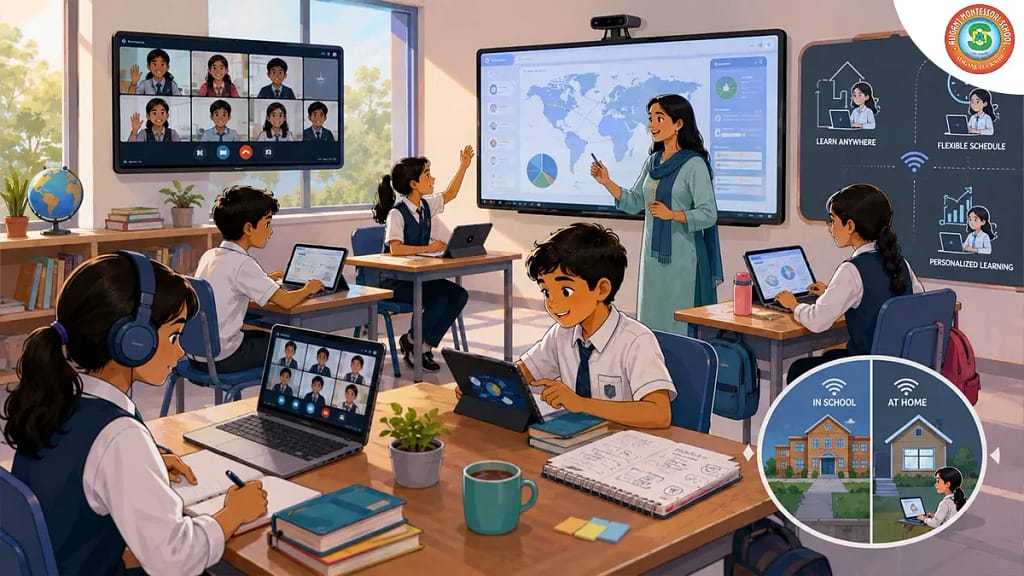
Hybrid learning combines traditional classroom teaching with digital learning experiences. This model allows students to benefit from both face-to-face interaction and technology-enabled education. Parents today are increasingly looking for smart CBSE schools in Lucknow that can provide children with future-ready learning environments while still maintaining strong educational values and emotional development.
At Aliganj Montessori School, hybrid learning is viewed as an opportunity to improve educational experiences through innovation, creativity, and balanced digital integration. As one of the trusted Montessori and CBSE schools in Lucknow, the school believes that modern education should prepare students not only for examinations but also for future careers, digital transformation, and lifelong learning.
Hybrid learning is not replacing traditional education — it is enhancing it.
Table of Contents
What Is Hybrid Learning?
Hybrid learning is a modern educational approach that combines:
- Classroom teaching
- Online learning tools
- Digital educational resources
- Interactive learning systems
- Smart classroom experiences
In hybrid learning environments, students learn through both:
- Physical classroom interaction
- Technology-supported educational activities
This creates a balanced educational model where students gain:
- Personal guidance from teachers
- Flexible access to learning resources
- Interactive learning opportunities
- Independent learning habits
At Aliganj Montessori School, hybrid learning supports holistic child development while maintaining the strong values of Montessori and CBSE education.
Why Hybrid Learning Is Growing in CBSE Schools
The rise of hybrid learning in India is influenced by several factors:
Rapid Technological Growth
Technology is becoming an essential part of education. Smart classrooms, AI-powered learning tools, and digital educational platforms are now common in modern schools.
Flexible Learning Needs
Students learn differently. Hybrid learning provides flexibility by combining visual, interactive, practical, and independent learning methods.
Future-Ready Education
Future careers will require:
- Digital literacy
- Communication skills
- Independent learning
- Technology awareness
Hybrid learning helps students develop these future-ready abilities.
Personalized Learning Experience: The Rise of Hybrid Learning in CBSE Schools
Technology allows teachers to customize educational experiences based on student learning pace and abilities.
This is why many parents now search for:
- Smart CBSE schools in Lucknow
- Hybrid learning schools
- Technology-integrated Montessori schools
- Future-ready schools in Aliganj Lucknow
How Hybrid Learning Benefits Students
Better Learning Flexibility
Hybrid learning allows students to access educational materials beyond classroom hours. Students can:
- Revise concepts digitally
- Practice interactive activities
- Watch educational videos
- Learn at their own pace
This flexibility improves understanding and confidence.
Improved Student Engagement
Traditional lecture-based learning sometimes reduces student participation. Hybrid classrooms use:
- Interactive smart boards
- Educational apps
- Gamified learning
- Multimedia explanations
- Online collaboration tools
These methods make learning more engaging and enjoyable for children.
At Aliganj Montessori School, interactive learning is combined with practical classroom activities to improve participation and concept clarity.
Personalized Learning Through Technology: Hybrid learning schools
One major advantage of hybrid learning is personalized education.
Technology helps teachers:
- Track student progress
- Identify learning gaps
- Create customized activities
- Support different learning speeds
Students who need extra support receive additional guidance, while advanced learners can explore concepts more deeply.
This aligns perfectly with Montessori education principles that emphasize child-centered learning and individual growth.
The Role of Smart Classrooms in Hybrid Learning
Modern smart classrooms are becoming essential in CBSE schools.
Smart classrooms include:
- Interactive digital screens
- AI-supported educational tools
- Multimedia teaching systems
- Online collaboration platforms
These technologies help:
- Improve concept understanding
- Increase student interaction
- Support visual learning
- Make lessons more interesting
At Aliganj Montessori School, smart learning tools are integrated carefully to enhance educational experiences while maintaining balanced learning environments.
Hybrid Learning Supports Independent Learning
Future education systems require students to become independent learners.
Hybrid education encourages children to:
- Explore educational resources independently
- Practice self-learning habits
- Manage learning schedules responsibly
- Build curiosity naturally
Independent learning improves:
- Confidence
- Decision-making abilities
- Problem-solving skills
- Academic responsibility
Montessori education strongly supports independent learning, making hybrid education highly compatible with Montessori principles.
Technology and Future Skills Development
The future workforce will require students to develop:
- Digital literacy
- Creativity
- Critical thinking
- Communication skills
- Collaboration abilities
- Adaptability
Hybrid learning environments naturally help students build these future-ready skills.
At Aliganj Montessori School, technology is used as a supportive educational tool that prepares students for modern learning systems without compromising practical education and emotional development.
Hybrid Learning and Experiential Education
One common misconception is that digital learning reduces practical experiences. In reality, hybrid learning can strengthen experiential education when used correctly.
Hybrid classrooms support:
- Interactive science simulations
- Visual storytelling
- Educational videos
- Creative projects
- Virtual learning experiences
At the same time, students continue participating in:
- Hands-on activities
- Classroom discussions
- Outdoor learning
- Group projects
- Practical life exercises
This balanced approach creates stronger concept understanding.
Why Parents Prefer Hybrid Learning Schools
Parents today understand that future education requires more than textbook memorization.
They want schools that offer:
- Technology-integrated learning
- Holistic development
- Smart classrooms
- Interactive education
- Flexible learning systems
Modern parents are searching for:
- Best CBSE schools in Lucknow
- Hybrid learning schools
- Montessori and CBSE schools
- Smart schools in Aliganj Lucknow
At Aliganj Montessori School, hybrid learning is designed to support both academic excellence and overall personality development.
Digital Literacy Is Becoming Essential
Hybrid learning naturally improves digital literacy among students.
Children learn:
- Responsible technology use
- Online educational research
- Digital communication
- Interactive learning participation
Digital literacy is now considered one of the most important future skills students need before high school.
However, balanced screen usage remains equally important.
Emotional Intelligence Still Matters
Even with technological advancement, emotional intelligence remains a critical part of education.
Children still need:
- Social interaction
- Emotional support
- Team collaboration
- Communication confidence
At Aliganj Montessori School, hybrid learning is carefully balanced with:
- Classroom interaction
- Group activities
- Creative learning
- Practical experiences
Technology supports education, but human connection remains central to student development.
Hybrid Learning Improves Communication Skills
Modern hybrid classrooms encourage:
- Interactive discussions
- Online collaboration
- Presentation-based activities
- Team learning projects
These experiences improve:
- Communication confidence
- Leadership qualities
- Public speaking abilities
- Collaboration skills
Communication is one of the most important future-ready skills for students today.
AI and Hybrid Learning
Artificial Intelligence is becoming increasingly important in education.
AI-supported systems can:
- Analyze student performance
- Suggest personalized learning materials
- Improve classroom engagement
- Identify learning challenges
AI helps teachers provide better educational support while making learning more interactive and adaptive.
At Aliganj Montessori School, technology integration focuses on improving educational quality while preserving creativity and experiential learning.
Hybrid Learning Reduces Learning Pressure
Traditional education systems sometimes create excessive academic pressure.
Hybrid learning reduces stress by:
- Supporting self-paced learning
- Improving concept understanding
- Providing flexible revision opportunities
- Encouraging active participation
Students often become:
- More confident
- More engaged
- Less fearful of mistakes
This creates healthier educational experiences for children.
Why Hybrid Learning Supports Creativity
Hybrid education allows students to explore creative learning methods through:
- Multimedia storytelling
- Educational presentations
- Digital art projects
- Interactive classroom activities
Creativity is becoming one of the most important future career skills.
Future-ready schools now focus on:
- Innovation
- Creative problem-solving
- Student imagination
- Independent thinking
At Aliganj Montessori School, creativity remains a key part of child development.
The Importance of Balanced Learning
Hybrid education works best when schools maintain a balance between:
- Technology usage
- Practical learning
- Outdoor activities
- Emotional development
- Classroom interaction
At Aliganj Montessori School, hybrid learning supports:
- Smart education
- Child-centered learning
- Experiential education
- Holistic development
The goal is to create confident, responsible, and future-ready students.
How Hybrid Learning Aligns with Future Education Trends
The future of education in India is moving toward:
- Flexible learning systems
- Technology-integrated classrooms
- Personalized education
- Skill-based learning
- Student-centered teaching
Hybrid learning supports all these modern educational goals while helping students adapt to future academic and career environments.
Why Aliganj Montessori School Supports Hybrid Learning
As one of the top Montessori and CBSE schools in Lucknow, Aliganj Montessori School believes in combining:
- Montessori learning principles
- Smart classroom experiences
- Interactive education
- Experiential learning
- Holistic child development
The school’s hybrid learning approach helps students:
- Build digital literacy
- Improve communication
- Develop creativity
- Strengthen independent learning habits
- Prepare for future education systems
This balanced educational model supports long-term academic and personal growth.
Conclusion: Hybrid Learning in CBSE Schools
Hybrid learning is shaping the future of education in India by combining traditional classroom experiences with smart digital learning tools. Modern students need flexible, engaging, and future-ready educational environments that support both academic excellence and life skill development.
At Aliganj Montessori School, hybrid learning is integrated thoughtfully with Montessori education, experiential learning, and holistic child development. The school believes that technology should enhance learning experiences while preserving creativity, emotional intelligence, and practical understanding.
The future belongs to students who can combine digital literacy, independent learning, communication skills, and creativity with strong educational foundations.
Frequently Asked Questions : Hybrid Learning in CBSE Schools
What is hybrid learning in CBSE schools?
Hybrid learning combines traditional classroom teaching with digital learning tools, online resources, and interactive educational technology.
Why is hybrid learning becoming popular in India?
Hybrid learning offers flexibility, personalized education, digital literacy development, and interactive learning experiences for students.
How does hybrid learning benefit students?
Hybrid learning improves:
Engagement
Independent learning
Digital literacy
Concept understanding
Communication skills
Is hybrid learning suitable for primary students?
Yes. When balanced properly, hybrid learning helps primary students build confidence, curiosity, and future-ready skills.
How does Montessori education support hybrid learning?
Montessori education encourages independent learning, creativity, experiential education, and child-centered teaching — all of which align well with hybrid learning systems.
How does Aliganj Montessori School use hybrid learning?
The school combines smart classrooms, interactive education, practical learning, and Montessori teaching methods to create balanced hybrid learning experiences.
Looking for a future-ready CBSE and Montessori school that combines smart learning with holistic child development?
Visit Aliganj Montessori School and discover how hybrid learning is preparing students for a smarter and more confident future.
Admissions Open for 2026 — Give your child the advantage of modern hybrid education today.