







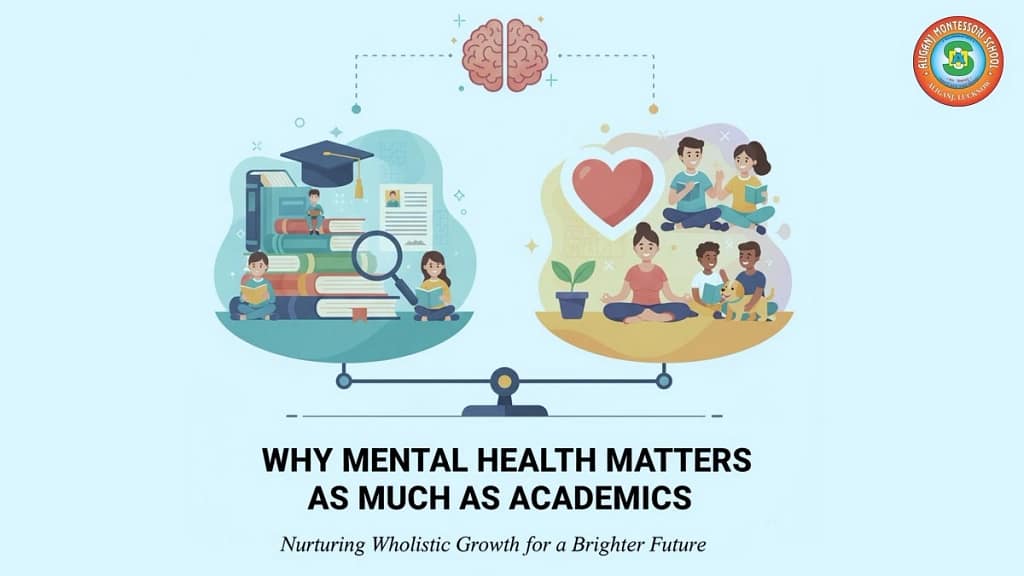

In the high-pressure education landscape of today, where grades and exam performance so frequently are at the forefront of discussion, one essential element remains under-emphasized: mental health. Indeed, student mental health is just as important as academic performance. Emotional happiness, psychological robustness, and mental health wellbeing no longer feature as optional add-ons in education but are essential to learning, student attainment, and future development.
This piece explores why mental health is as important as academics, the relationship between mental health and academic success, what students and schools can do to enhance mental health alongside education, and how a balanced strategy in mental health and academics promotes genuine student well-being and development.
Table of Contents
Getting to Know the Relationship Between Academics and Mental Health
What is educational mental health?
Mental health means the psychological, emotional and social well-being of a student. It influences the way that students think, feel, behave, cope with stress, relate to others and make decisions. Schools are foundational settings where student mental health needs to be supported.
Why mental health and academics are closely connected
- Students with good emotional well-being are more focused, driven and interested, which improves academic achievement.
- On the other hand, students with mental health issues (depression, anxiety, stress) can find it difficult to concentrate, remember, behave, and attend— all of which adversely affect academic achievement.
- Student mental health and well-being is reported to be fostered in schools with enhanced classroom behavior, improved peer relationships, and increased academic participation.
The cost of neglecting mental health at school
When mental health is ignored, the consequence is dire: greater dropout, more behavioural problems, worse academic progress and long-term effects.
Why Mental Health Matters as Much as Academics
Wellness drives learning
Learning occurs best when the mind is safe, supported and able. Mental health and emotional well-being establish the foundation for successful learning, creativity, retention and achievement.
Academics alone aren’t sufficient
Monitoring test scores and curriculum alone overlooks the whole person. Mental health support is needed to make academic interventions succeed.
Long-term success requires balance
Learning isn’t about grades alone—it’s learning to live. Emotional intelligence, resilience, mental well-being and people skills are as important as book learning.
Mental health fuels equity
Students with mental health issues typically have disadvantaged or under-resourced backgrounds. Mental health support advances equity in education by allowing all students to engage fully.
Most Important Areas Where Mental Health Facilitates Academic Achievement
Attendance and involvement
Optimal mental health is associated with improved attendance and engagement; suboptimal mental health frequently results in absence, disengagement or dropout.
Focus, memory and learning
Anxious or stressed students can find it difficult to concentrate, recall material or become fully engaged—all of which damages academic progress.
Behaviour and classroom climate
Mental health issues in students can result in behaviour problems increasing, not just for the student but also for others in the learning climate. Such schools have healthier school climates according to schools with robust mental health programmes.
Motivation, resilience and persistence
Well-adjusted students are more likely to see through difficult assignments, bounce back from setbacks and remain motivated—skills that are crucial for academic development and long-term learning.
Social and emotional learning (SEL) & mental health
Social-Emotional Learning programs develop skills such as self-awareness, self-management, social awareness, relationship skills and responsible decision-making. These directly relate to mental health and therefore aid academics.
Strategies for Schools and Educators to Support Mental Health and Academics
Establish a safe, supportive learning environment
Physical, emotional and psychological safety in schools is critical. Good mental health, engagement and learning are fostered through a positive environment.
Embed mental health education and awareness
Mental health literacy: recognizing distress, minimizing stigma, educating staff and students. This facilitates early identification and intervention.
Ensure access to mental health services and support
School counselling, referrals, peer mentoring, wellness programs—these assist in meeting student mental health concerns and keeping them linked to learning.
Integrate social-emotional learning (SEL) and resilience training
Education in coping skills, mindfulness, emotional control and resilience promotes mental health and thus enhances academic performance.
Monitor, act early and tailor support
Utilize data to monitor attendance, engagement, behavior and achievement; recognize students at risk; offer targeted assistance.
Parent, community and health service collaboration
Mental wellbeing is everyone’s business: families, schools and community services need to collaborate to promote wellbeing and academic success.
Teacher professional learning
Teachers require professional development to identify mental illness, respond, and provide holistic care—integrating academic instruction with wellbeing care.
Support student voice, agency and wellbeing culture
Encourage students to engage in wellness programmes, voice concerns, develop peer networks and establish a culture where mental well-being is as important as academics.
Bringing Mental Health into the Academic Experience
Align curriculum with wellbeing
Incorporate mental health principles into curricula: stress management in science, reflection in literature, service in social studies—connecting learning with wellness.
Design balanced schedules and workload
Heavy academic workload can affect mental well-being if imbalanced. Schools should organize study, revision, and rest to facilitate academic achievement and mental health.
Adopt formative assessment and feedback, rather than high-stakes testing
Regular low-stress testing and positive feedback minimize worry and enable improved learning.
Encourage peer learning and working together
Collaborative work, class discussion and group projects develop relationship skills, social connection and emotional support—healthy for learning and mental health.
Provide extracurricular and wellness time
Balanced education incorporates time for creativity, arts, sports, mindfulness, service—all of which help mental health and enhance the learning experience.
Measuring Success: Academic and Mental Health Indicators
Academic indicators
Grades, test scores, attendance, progress, engagement and retention.
Mental health indicators
Student self-reports of wellbeing, behaviour incidents, referrals to counselling, attendance trends, drop-out.
Comprehensive assessment
Combining both sets of indicators provides a more complete picture of student achievement than academics in isolation.
Systematic improvement
Continuing review, feedback loops, voice of student, teacher input and data inform adjustment to mental health support and academic programs.
Challenges and How to Meet Them
Stigma around mental health
Most students and families see mental health as forbidden or taboo. Awareness and education are the answers.
Resource limitations
Schools might not have counselors, mental health training or budget—creative partnerships and community resources are the answer.
Academics vs. wellness
Excessive focus on exams can foster stress. Schools have to rebalance priorities to support wellness and learning on an equal basis.
Intervention ethics and data privacy
Monitoring mental health data has to respect privacy, ethics and consent—schools need to navigate with care.
Sustaining culture change
Embedding mental health as a priority alongside academics requires leadership commitment, ongoing professional development and cultural shift.
Why Students and Parents Should Care
Students
Prioritising your mental health means you’ll perform better academically, stay engaged, enjoy learning and build resilience for life—not just exams.
Parents
Supporting your child’s mental health is as important as tutoring or extra classes. Emotional wellbeing underpins academic success.
Educational Institutions
Schools that strike a balance between mental health and academics graduate well-rounded students, decrease dropout, enhance engagement and foster success.
Society
When students prosper both academically and mentally, they become empowered citizens, and that makes societies and economies stronger.
FAQs – Frequently Asked Questions
1. Why is mental health as important as academics?
Because mental health has a direct impact on how well a student is able to learn, focus, participate and accomplish academic achievement. Good mental health provides the foundation for academic success—and without it, even the best curriculum and instruction won’t be enough.
2. How does poor mental health affect student learning?
Poor mental health may result in inattentiveness, memory problems, lack of motivation, behavior difficulties, attendance and lower performance results.
3. What can schools do to facilitate both mental health and learning?
Schools can develop supportive learning environments, implement mental health awareness programmes, offer counselling services, integrate social-emotional learning, track student wellbeing and work in partnership with families and communities.
4. How can students enhance their own mental wellbeing while learning?
Students can engage in healthy sleep habits, physical exercise, mindfulness, access assistance when necessary, develop positive peer networks, learn to manage workload and balance school work with wellness activities.
5. Are there evidence-based mental health programs that can enhance academic outcomes?
Yes. Studies indicate that schools that foster mental health and well-being have improved classroom behavior, attendance and academic performance.
6. What can parents do to help their child’s mental health and academic achievement?
Parents can establish open communication regarding feelings, provide healthy habits, get professional assistance if necessary, promote balanced life (not only study), and partner with the school.
Conclusion
Mental health matters just as much as academics. In fact, one cannot flourish without the other. True education nurtures the mind and the emotions, the intellect and the soul. Schools that treat mental health and academic excellence as two sides of the same coin prepare students not just for exams—but for life.
Education that prioritizes mental health encourages students to think deeply, feel compassionately, learn actively and live resiliently. Academic achievement is important, but it is the emotional, social and mental well-being of students that supports that achievement—and gives it meaning.
Let us strive for education systems where grades and mental health, achievement and wellness, knowledge and humanity walk hand in hand.
At AMS, we’re committed to the belief that academic excellence and student well-being walk together. That’s why AMS weaves mental health assistance, emotional well-being programs and academic rigor into each phase of learning.
Sign up for AMS today and give your child the opportunity to learn in a nurturing climate where mental health counts as much as academics.
Discover AMS Programs| Get in Touch with AMS Team