


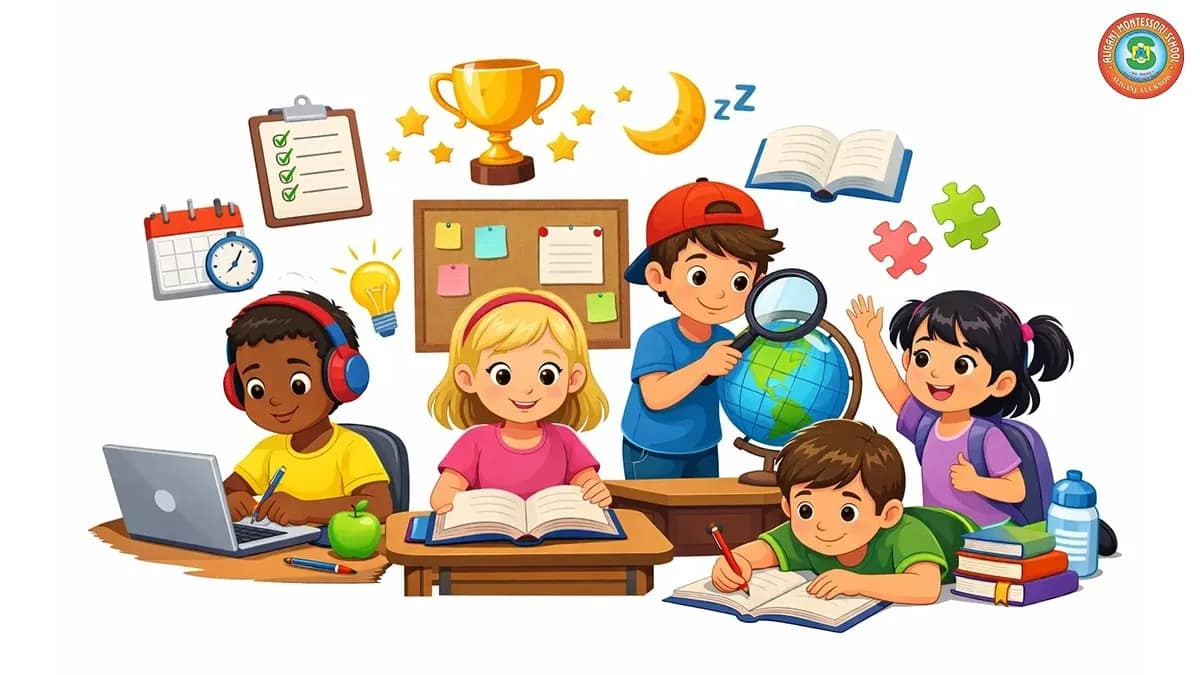


Montessori Curriculum: In this fast-changing world of today, education does not mean the mechanized process of mugging up textbooks or securing good marks in examinations. The real purpose of education in today‘s age is to create independent thinkers, intelligent problem solvers, and confident decision makers. And the most successful educational method that develops these qualities is the Montessori curriculum.
The Montessori method emphasizes a learning environment where children are given the freedom to discover and learn on their own through interactive activities and inquisitive explorations. As a result, children take ownership of their learning at an early age.
Aliganj Montessori School uses the Montessori philosophy in the lower years to enable children to develop strong intellectual and emotional foundations. One of the trusted Montessori schools in Aliganj, Lucknow, AMS calls for independent learning, activity-based education, and overall development.
Table of Contents
Understanding the Montessori Curriculum
The Montessori curriculum is centered on principles of teaching and learning established by Dr. Maria Montessori. It is founded upon concepts such as nurturing independent learning, individual exploration, and cooperative play.
In traditional classroom teachers teach the whole lesson while the students listen. In a Montessori classroom, students engage themselves in learning.
The key elements of the Montessori curriculum include:
- Child-centered learning
- Learning objects
- Be able to work independently and as part of a team within a structured learning environment
- Mixed age classing is when two or more age groups are taught together.
- Encouragement of independence
- These seven principles transform the child into an active seeker of information, as opposed to a passive consumer.
Aliganj Montessori School is applying Montessori methods carefully in order to make a foundation for the students, gaining curiosity, creativity, and self and other-confidence.
Why Independent Thinking is Important for Children
Independent thinking is one of the most important skills that children can acquire early on.
Children who think independently are more likely to
Be able to think creatively and solve problems
Native people have more knowledge and awareness than people from Western culture. Therefore, I think native people in Indonesia are suitable participants to take this research because they are used to making choices as a native person.
Will adapt to the new situation
Develop managerial skills
Independent thinkers grow into lifelong learners who continue their pursue of knowledge after school.
The Montessori method is somehow tailored to develop these skills.
How the Montessori Curriculum Promotes Independent Thinking
1. Child-Centered Learning Environment
Montessori children are afforded the choice of activities they might want to engage in.
This allows students to:
- Discuss topics they like
- Learn at their own pace
- Develop self-motivation.
At the school of Aliganj, teachers have stated that they would rather lead children than keep them busy all the time, which creates their autonomy of searching.
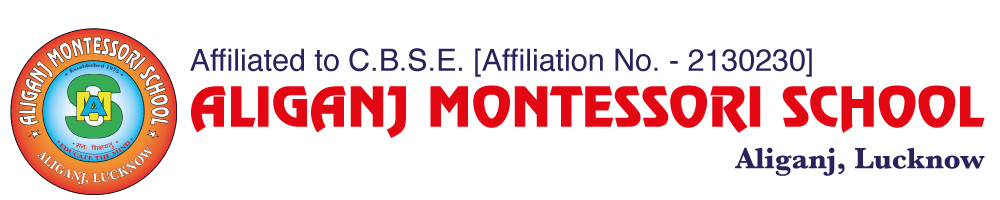
2. Hands-On Learning Activities
The practice of Montessori school is an experience.
The young students interact with types of learning materials that offer them concrete experiences.
Examples include:
- Counting beads for mathematics
- Puzzle maps of Geolovers
- Sensory Materials for Cognitive Development
These activities enable children to discover answers independently and thus develop critical thinking skills.
3. Encouraging Curiosity and Questions
- The curiosity is the nucleus of independent thinking.
- Offer children the opportunity to inquire, explore concepts, and experiment with approaches.
- At Aliganj Montessori School, teachers foster a spirit of inquiry by establishing a classroom environment in which individual questions are encouraged and appreciated.
This helps children to reach decisions.
4. Learning at an Individual Pace
All children learn in different ways.
There is also a prevalent bias present in traditional education that tends to go against students by forcing them to keep the same schedule as their peers.
The Montessori curriculum allows children to:
- Learn concepts at your own pace
- Attempt more difficult subjects.
- Move rapidly through topics they understand very well.
This personal experience builds self-esteem and promotes self-learning.
5. Freedom Within Structure
Montessori gives children freedom, but it is a disciplined environment.
Learners are free to select their learning tasks, but these are limited by individual classroom regulations.
This balance helps children:
- Develop accountability
- Learn decision-making skills.
- Manage one’s own time/jobs.
Methods at Aliganj Montessori School, where structured independence is encouraged, foster self-disciplined and motivated learners.
6. Practical Life Activities
Activities for practical life are quite distinctive of a Montessori education.
These activities include tasks such as:
Materials organization Cleaning workstations
- Life skills.
- Through such activities children can learn independence and responsibility.
- Students realize their capacity to accomplish tasks independently, which gives them confidence.
7. Collaborative Learning
Montessori classrooms have mixed ages.
The support of veteran pupils for joint working with younger pupils.
This encourages:
- Peer learning.
- Developing leadership
- Ability to communicate well with colleagues
Furthermore, their understanding of other people‘s perspectives and opinions is cultivated.
The Role of Teachers in Montessori Education
Montessori teachers are guides and facilitators, not strictly teachers.
Their responsibilities include:
- Noticing the way each child learns
- Providing the right type of learning resources
- Stimulating attention, enquiry and exploration.
The staff at Aliganj Montessori School, who are very knowledgeable, support children in finding their own potential, and because of the moderate staffing ratios, children can be independent.
Holistic Development Through Montessori Learning
Children should be encouraged to think independently.
Montessori education also supports:
- Emotional intelligence
- Interpersonal skills
- Creativity
- Problem-solving skills.
Within AMS, education is seen as developing our whole selves, developing us into confident young people ready for the world.
Preparing Children for Future Success
The skills acquired in a Montessori environment stay with a student for a lifetime.
Children who learn through Montessori methods often demonstrate the following:
- Deep concentration
- Self-discipline
- Qualities of leadership
- Adaptability
- They utilize these skills both at home and outside the home, in educational placement and work.
Boys at Aliganj Montessori School learn today‘s lessons in a way that prepares them for tomorrow.
Why Parents in Lucknow Choose Aliganj Montessori School
Most of the parents in Lucknow are looking for the best Montessori school for their children, and in that case, they prefer AMS.
Key features include the following:
- Classrooms designed based on Montessori principles Skilled and caring teachers
- Activity-based learning approach
- Provide a safe and caring learning environment
These features are what makes Aliganj Montessori School one of the most reliable early learning schools in Lucknow.
FAQs
1. What is Montessori education?
Montessori education is an approach to learning that emphasizes the individual needs of each child and fosters independence and creativity.
2. How does Montessori education promote independent thinking?
It gives children the freedom to select activities, try out ideas through concrete materials, and set their own pace.
3. At what age should children start Montessori education?
Nearly all Montessori school programs are open to children from ages 2 to 4.
4. What skills do children develop in Montessori classrooms?
Students gain the skills of independence, creativity, problem-solving, and communication and the confidence to go with them.
5. Why is independent thinking important for children?
Encourages independent thinking, which helps children to think for themselves, decide things for themselves, make their own decisions, and adapt to new situations.
6. How does Aliganj Montessori School support independent learning?
AMS employs methods derived from the Montessori system of education, activity-based learning, and individualized instruction in order to foster independent thinking.
7. Is Montessori education suitable for future academic success?
Yes. The Montessori program encourages solid development in these vital areas: critical thinking, concentration, and discipline.
Conclusion
Independent thinking is a highly desirable skill for children to gain during their formative years. The Montessori curriculum is set up to promote this with the encouragement of curiosity, creativity, and self-esteem.
They promote autonomy by encouraging children to explore and learn by doing as well as through individualized instruction.
The Aliganj Montessori School employs working methods that reflect the unmistakable influence of the Montessori approach, like the introduction of fine work materials, mixed-age classrooms, free choice of work, and individualized learning. This system of working enables the children to develop simultaneously on academic, social, and emotional fronts.
Hence, if you are looking for a Montessori school in Lucknow where your kid gets to learn independently and develops as a whole child, then the Aliganj Montessori School is the best option for you.
Allow your child to thrive in an environment where curiosity, confidence, and creativity are encouraged.
For more information about admissions and early childhood education, consult the Aliganj Montessori School official webpage.