

In the current fast-paced world where educational excellence tends to take center stage, divine education is burgeoning as an essential pillar in developing not only scholars, but entire human beings. Divine education focuses on spiritual growth, values-driven learning, character building, and whole-person growth in addition to academic excellence. In this in-depth essay, we explore divine education: what it is, why it’s important, how to execute it, best practices, challenges, and how institutions can make divine education a part of their culture. We’ll also address common questions so you can truly get it and apply it.
Table of Contents
What is Divine Education?
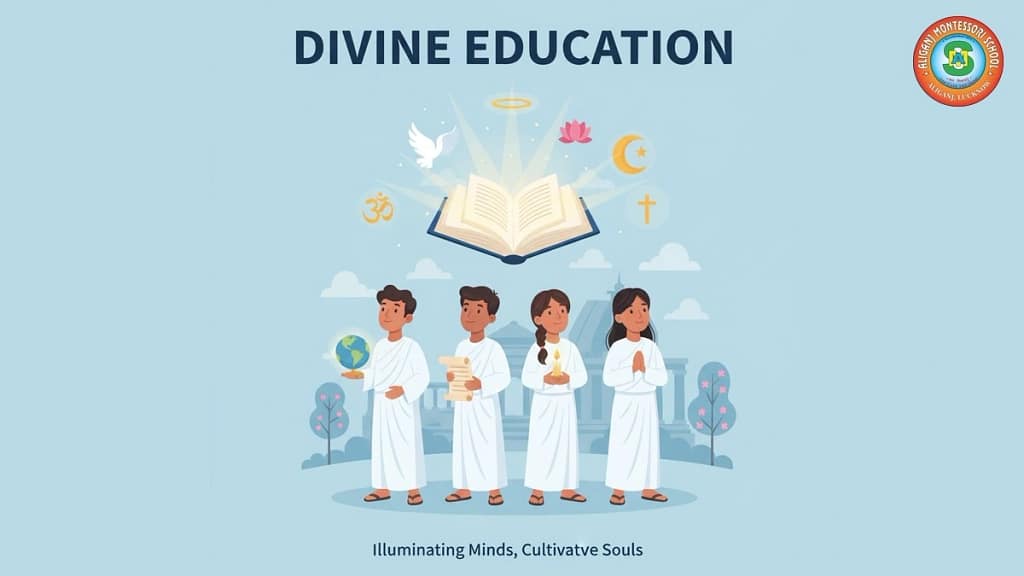
Divine education is an education philosophy and practice that unites spiritual consciousness, ethical values, character formation, and moral purpose with the learning process. As defined by one source, divine education is “the process by which the Divine instructs and shapes the understanding of truth.”
In wider pedagogical perspectives, divine education is explained as “spiritual understanding coupled with reason broadens a child’s capacity to perceive, empathise, and understand more deeply.”
Main aspects of divine education are:
- Spiritual awareness: Seeing a purpose, meaning and relationship beyond the merely material.
- Character and values: Developing virtues like honesty, compassion, integrity, responsibility, respect.
- Holistic development: Nurturing body, mind, feelings, spirit—not academic intelligence alone.
- Ethical leadership and service: Equipping students to be leaders who serve the world and their communities.
- Integration of faith or universal values: Although not necessarily religious, divine education most often borrows from spiritual traditions, universal values or transcendent purpose.
Therefore, divine education is really about teaching the heart as well as the mind—and forming people who are both academically able and morally sound.
Why Divine Education Matters
In an era of technological disruption, global connectivity and shifting value systems, the need for divine education is more urgent than ever. Here’s why:
Building Resilient, Ethical Individuals
Academic and technical skills are important—but without a strong moral compass, technology and knowledge risk being misused or applied selfishly. Divine education helps build resilience, ethical judgement, and a sense of purpose.
Fostering Holistic Outcomes
Research into holistic education points out that students learn better when the learning caters to cognitive, emotional, social and spiritual aspects.
Divine education follows this through fostering spiritual development, self-knowledge and values rather than mere facts and proficiency.
Developing Meaning-Driven Learners
Students who are steeped in divine education are likely to connect with learning, be motivated by purpose, and remain engaged. When education engages the spirit and values, learning is more profound.
Developing Character and Leadership
The leaders of tomorrow will not only require intelligence but also empathy, ethics, social responsibility and vision. Divine education develops the qualities of learners which makes them future-proof not only for employment but for service, innovation and making a difference.
Cultural and Value Integration
In plural and multicultural societies, divine education presents a context to respect and integrate multiple faiths, worldviews and values. Schools are able to construct inclusive settings where children mature with ethical awareness and cross-cultural understanding.
Core Principles and Pillars of Divine Education
For divine education to work effectively, institutions have to be guided by some principles and pillars. Below are the core elements:
Purpose & Meaning
Education needs to respond with: Why are we educating? Godly education is based on meaning, purpose and beyond goals—not merely metrics or test scores.
Spiritual and Ethical Literacy
In addition to academic literacy, students need to develop spiritual literacy (knowledge of self, values, purpose) and ethical literacy (making responsible choices, ethical action).
Integration of Curriculum
Ethics and spirituality are not add-ons to be chosen or not—their threads are woven into all aspects of the school, every subject, activity and life.
In science, literature or sport, values and spirituality are expressed.
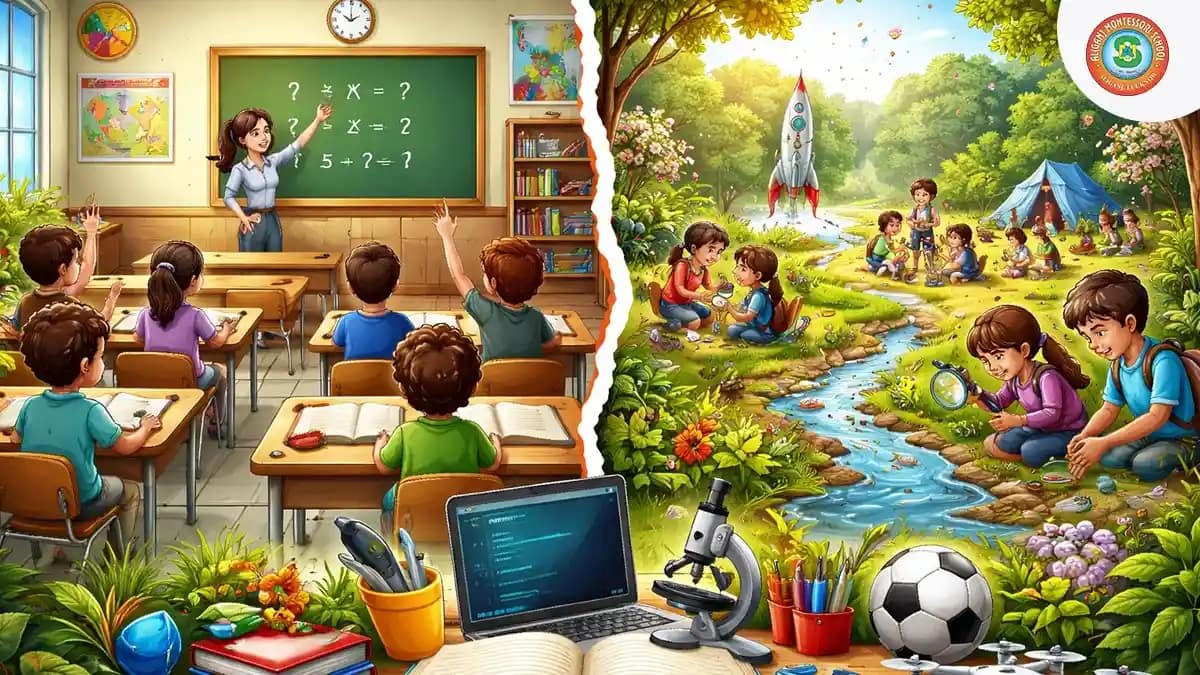
All-around Development
Young people are encouraged to develop intellectually, emotionally, socially, physically and spiritually. Whole person development is stressed in divine education.
Community and Service
Education is not limited to the classroom. Divine education focuses on service, community involvement, contribution and leadership—students are motivated to serve and lead.
Reflective Practice
Students and teachers practice reflection, meditation, questioning and self-understanding. Divine education encourages awareness and conscious development.
Inclusivity and Respect for Diversity
Divine education respects various religions, cultures, values while giving importance to universal values such as compassion, truth, respect. Schools instil an environment of respect and harmony.
How to Implement Divine Education in Schools
Here’s the guide for schools to implement and integrate divine education in their system.
Define Your Vision and Mission
School leaders need to define a clear vision of divine education: “We will develop spiritually conscious, value-driven, whole-person developed learners.” Align mission, vision, culture with this.
Curriculum Design
Embed spirituality and values in the curriculum:
- Daily assemblies with reflection, value talk.
- Subject-wise integration of ethics and spiritual insights.
- Project-based service learning and community engagement.
- Mindfulness, meditation or quiet reflection classes.
Teacher Training & Culture
Teachers should be trained not only in academics but also in enabling spiritual development, ethical discussion, character studies and reflective practices. The school culture needs to imbibe the divine education philosophy.
Learning Environment & Ethos
Build a school climate that awakens the spirit: lovely environment, peaceful areas, respectful relations, welcoming community, rituals of appreciation and worth. From one source: “A child’s spirit is nourished by an inspiring school climate.”
Student Voice & Leadership
Enfranchise students with leadership positions in value programs, peer mentoring, service activities, spiritual clubs. Facilitate student-initiated reflection and service.
Community & Parent Engagement
Involve parents and community in embracing the mission of divine education. Collaborate with them in values, service and spiritual growth programs.
Monitoring, Reflection & Continuous Improvement
Employ qualitative and quantitative indicators: student feedback on values/attitudes, service hours, reflective diaries, academic progress correlated with moral development. Monitor and improve.
Benefits & Outcomes of Divine Education
When well-implemented, divine education generates a variety of benefits that transcend academic success.
Stronger Character, Ethics and Purpose
Students build responsible, honest, compassionate character and a sense of purpose beyond self.
Increased Student Engagement
When learning is linked to spiritual value and purpose, students engage more richly, exhibit curiosity and resilience.
Improved Mental and Emotional Well-being
Reflection, mindfulness, values and service lead to enhanced self-esteem, emotional stability, stress-management and general well-being.
Leadership & Service Mindset
They become leaders who consider service, community, ethics and impact—not merely career success.
Inclusive and Value-Rich School Culture
Divine education schools focus on respect, inclusion, diversity, and foster strong community culture, minimizing conflict and maximizing belonging.
Long-Term Life Success
Academics are important for college and career, but students who have values, purpose and character are best prepared for life after exams—they are future-ready citizens, entrepreneurs and ethical professionals.
Overcoming Challenges
Introducing divine education poses specific challenges—but with sensitivity and forethought, they can be overcome.
Defining Spirituality in Different Contexts
Challenge: Schools are in multi-faith settings. The definition of spirituality has to be universal, not sectarian.
Solution: Emphasize universal values (kindness, respect, purpose), be respectful of all faiths, stress character rather than dogma.
Assessing Spiritual and Value Outcomes
Challenge: Academic measures dominate; value outcomes are less easy to measure.
Solution: Utilize qualitative instruments: reflection journals, student voice surveys, service outcomes, peer and teacher feedback.
Balancing Academic Rigor with Spiritual Growth
Challenge: Schools are concerned that value/character emphasis can take away from academic achievement.
Solution: Interweave values with academic learning instead of addressing separately—divine education enhances more profound learning, which will frequently enhance academic results.
Training and Sustaining Teacher Commitment
Challenge: Teachers might not be instructed in spiritual/ethical pedagogy.
Solution: Offer continuous professional development, develop a community of practice, exchange success stories, mentor staff.
Cultural Resistance
Challenge: Certain stakeholders might interpret divine education as religious or non-scholarly.
Solution: Clearly articulate purpose, advantage, statistics; demonstrate that spiritual/ethical education is compatible with academic achievement and life preparedness.
Divine Education in Practice: Examples & Approaches
While divine education differs in contexts, some practices recur:
- Daily reflection assemblies in which students reflect, exchange values experiences and give thanks.
- Service-learning initiatives in which students engage in actual service to communities, connecting learning with purpose.
- Mindfulness or contemplative period integrated into school day to cultivate self-awareness.
- Character curriculum in which virtues are modelled, taught, practiced, and examined.
- Learning across faiths and values in which respect for all faiths is encouraged, therefore fostering spiritual openness.
- Incorporating arts, nature and spirituality: nature walks are taken by students, meaning-based art, storytelling of values—this resonates with holistic education philosophies.
- These pragmatic methods instill divine education in the day-to-day life of students and schools.
FAQs – Frequently Asked Questions on Divine Education
1. What is the difference between divine education and traditional education?
Traditional education mostly deals with book knowledge, skills and performance. Divine education puts emphasis on spirituality, character, values, purpose and overall development of students. It unites heart, mind and spirit.
2. Can divine education be used in a secular school?
Yes. Divine education does not have to be faith-based—it can center on shared values (kindness, respect, purpose, ethics) and integrated growth. The essential is inclusive spiritual understanding rather than particular faith doctrine.
3. What competencies and skills do students acquire via divine education?
Students learn ethical thinking, emotional intelligence, resilience, leadership, service orientation, self-knowledge, purpose orientation, and greater learning engagement.
4. In what ways does divine education enhance academic achievement?
Through stimulating engagement, direction, emotional well-being and overall development, divine education has the potential to result in enhanced motivation, perseverance and greater learning—each of which assists in enhanced academic performance.
5. How is the effectiveness of divine education evaluated?
Indicators of success are: student reflection journals, student value and purpose survey responses, quantity of service activities, student leadership roles, school culture measures, and academic progress in concert. Both qualitative and quantitative data apply.
6. Does divine education put non-religious students at a disadvantage?
Not necessarily. If implemented inclusively, divine education emphasizes universal values and spiritual development in the broad sense (meaning, purpose, character) instead of religious indoctrination. Value-based and holistic education can be of benefit to all students.
7. What are the primary challenges schools encounter in the implementation of divine education?
Challenges are defining spirituality inclusively, preparing educators, quantifying value outcomes, marrying up with academics, and maintaining commitment. To overcome these, leadership, culture shift and continuous investment are needed.
Integrating Divine Education: The Future Ahead
In order to effectively integrate divine education into an institution, the following are steps that can lead the way:
- Leadership commitment: School leadership has to own divine education and communicate the vision.
- Culture building: Establish a community spirit that embodies spirituality, values, service and inclusiveness.
- Curriculum integration: Integrate spiritual and ethical aspects in all curricular areas, activities and school culture.
- Teacher empowerment: Offer training, resources, reflection areas and peer support for teachers to lead divine education.
- Student agency: Enable students to be value-leaders, service ambassadors, spiritual mentors and reflective practitioners.
- Community partnerships: Engage parents, local groups, service projects and international value initiatives.
- Monitoring & ongoing improvement: Monitor progress, reflect on results, share stories of change, improve strategies, celebrate success.
- When implemented effectively, divine education is the driving force behind the school’s core identity—informing culture, learning and lives.
Conclusion
In a meaning-starved world, ethical leadership and human development in its fullness, divine education provides a necessary way. It remaps success—from grades on tests to character, from discrete subjects to interconnected growth, from career-ready to human-ready. Those schools which engage divine education develop students who are intellects empowered, values-based, spiritually conscious and prepared to serve.
Divine education is important because it develops the entire person: mind, heart, spirit and community. It develops values, purpose, perseverance and leadership.
If we desire students not only to achieve, but to count; not merely to learn, but to lead with character and empathy—divine education is the answer.
At AMS, we are committed to the potential of divine education to change lives. Our programmes combine spiritual development, character formation, values-based learning, and academic achievement.
Come join AMS today and start a journey where education meets purpose, values meet action and students become changemakers.
Discover AMS Admissions | Talk to AMS Team