
How to Identify a Child-Centered School in Lucknow
Choosing the right school has become more challenging—and more important—than ever before. Parents today are no longer satisfied with schools that focus only on textbooks, examinations, and report cards. Instead, they are searching for schools that truly understand children, nurture their unique talents, and prepare them for a rapidly changing world.
This shift has given rise to one of the most important educational approaches of our time: Child-Centered Learning.
A child-centered school places the child—not the syllabus—at the heart of education. It recognizes that every student learns differently and deserves an environment where curiosity, creativity, confidence, and critical thinking can flourish.
As more families search for the Best Child-Centered School in Lucknow, they are asking important questions:
- What makes a school child-centered?
- How do I identify a child-friendly learning environment?
- Is Montessori education truly child-centered?
- Which school focuses on holistic child development?
At Aliganj Montessori School (AMS), child-centered education has always been more than a teaching method—it is the foundation of everything we do. By combining Montessori principles with the CBSE curriculum, AMS creates a nurturing environment where children become independent learners, confident communicators, and responsible future citizens.
Table of Contents
Quick Answer: What Is a Child-Centered School?
A child-centered school is an educational institution that designs learning around each child’s needs, interests, abilities, and pace of development. Instead of expecting every student to learn in the same way, child-centered schools encourage exploration, creativity, hands-on learning, emotional well-being, and independent thinking while helping every child reach their full potential.
Why Parents in Lucknow Are Choosing Child-Centered Schools
Education has changed dramatically over the last decade.
Earlier, schools mainly focused on:
- Completing the syllabus
- Preparing students for examinations
- Memorization
- Uniform teaching methods
Today’s education is very different.
Parents now want schools that help children develop:
- Confidence
- Creativity
- Leadership
- Communication skills
- Emotional intelligence
- Problem-solving abilities
- Digital literacy
- Adaptability
These are the qualities children need to succeed in the future.
As a result, many families searching for the Best Montessori School in Lucknow or the Best CBSE School in Lucknow now prioritize schools that focus on the complete development of every child.
Why Every Child Learns Differently
One of the biggest myths in education is that every child learns in the same way.
In reality, children have different strengths.
Some children learn best through:
- Observation
- Practical activities
- Visual demonstrations
- Storytelling
- Music
- Group discussions
- Individual exploration
Others may require additional time or different teaching strategies to understand the same concept.
A child-centered school recognizes these differences and adapts its teaching accordingly.
Instead of asking children to fit into one learning model, it creates multiple opportunities for success.
The Shift from Teacher-Centered to Child-Centered Learning
Traditional education often places the teacher at the center of the classroom.
The teacher speaks.
Students listen.
The syllabus drives learning.
In contrast, child-centered classrooms encourage students to become active participants.
Traditional Classroom
- Teacher-led instruction
- Memorization-focused
- Limited interaction
- Same learning pace for everyone
- Marks-oriented
Child-Centered Classroom
- Student participation
- Hands-on experiences
- Individual learning pace
- Interactive discussions
- Skill-based learning
- Conceptual understanding
This approach not only improves academic performance but also develops curiosity, confidence, and lifelong learning habits.
Sign #1: Every Child Receives Individual Attention
The first sign of a child-centered school is that every child matters.
Teachers understand that each student has:
- Different interests
- Different strengths
- Different challenges
- Different learning speeds
Rather than comparing students, educators focus on helping every child progress from their own starting point.
At Aliganj Montessori School, teachers carefully observe children’s learning patterns and provide personalized guidance that supports individual growth.
This approach helps children feel valued, understood, and motivated.
Personalized Learning Creates Better Outcomes
When education is personalized:
Children become more confident because they are not constantly compared with others.
Teachers can identify:
- Learning gaps
- Hidden talents
- Individual interests
- Developmental needs
Parents also gain a clearer understanding of their child’s progress.
Personalized learning ensures that no child is left behind.
Sign #2: Learning Happens Through Activities
Children learn best when they actively participate in the learning process.
A child-centered school does not rely solely on lectures.
Instead, students engage in:
- Classroom experiments
- Educational games
- Creative projects
- Storytelling
- Practical demonstrations
- Nature-based activities
- Group collaboration
This approach is known as Experiential Learning.
Children remember experiences much longer than memorized facts.
At Aliganj Montessori School, activity-based learning is integrated into everyday classroom experiences to make education meaningful and enjoyable.
Why Experiential Learning Improves Understanding
Experiential learning helps children:
- Understand concepts deeply
- Develop critical thinking
- Improve memory retention
- Stay actively engaged
- Build confidence
Instead of simply reading about a concept, students experience it.
This transforms learning into discovery.
Child-Centered Learning Builds Confidence
Confidence grows when children feel capable of learning independently.
Child-centered schools encourage students to:
- Ask questions
- Share opinions
- Explore ideas
- Make decisions
- Solve problems
Children are not afraid of making mistakes because mistakes are viewed as valuable learning opportunities.
At Aliganj Montessori School, teachers encourage exploration while providing the support children need to succeed.
This balance helps students become self-confident learners.
Why Parents Should Observe the Classroom
One of the best ways to identify a child-centered school is by observing the classroom itself.
Ask yourself:
- Are children actively participating?
- Do teachers encourage questions?
- Are students working collaboratively?
- Is learning interactive?
- Do children appear engaged and happy?
A classroom where children are excited to learn often reflects a strong child-centered educational philosophy.
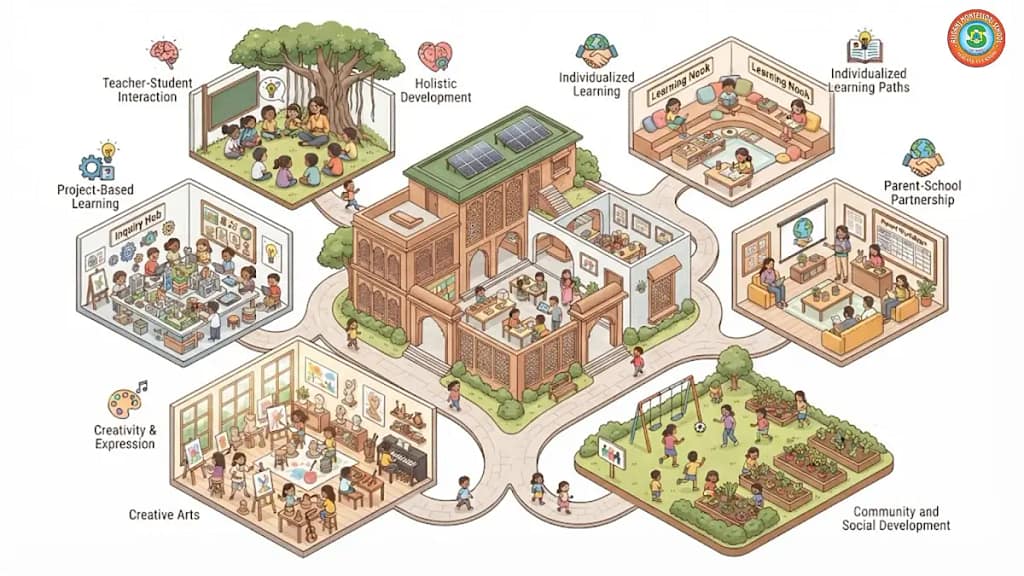
How AMS Creates a Child-Centered Learning Environment
At Aliganj Montessori School, classrooms are thoughtfully designed to encourage:
- Independent learning
- Creativity
- Collaboration
- Curiosity
- Respect
- Confidence
- Practical exploration
- Holistic development
Teachers act as facilitators, helping children discover knowledge through meaningful experiences rather than simply delivering information.
This learning environment supports both academic excellence and personal growth.
The Signs That Show a School Truly Puts Children First
A child-centered school is much more than a place where lessons are taught. It is an environment where children feel valued, respected, encouraged, and inspired to become the best version of themselves.
Parents often visit schools and notice beautiful classrooms, smart boards, or modern infrastructure. While these are certainly beneficial, they do not always indicate whether the school truly understands children’s learning needs.
The real indicators lie in the school’s culture, teaching philosophy, classroom interactions, and the opportunities it provides for every child to grow.
Let’s explore the next signs that help parents identify a genuinely child-centered school.
Sign #3: Teachers Act as Mentors, Not Just Instructors
One of the clearest characteristics of a child-centered school is the role of the teacher.
In traditional classrooms, teachers often deliver information while students simply listen and take notes.
In a child-centered classroom, teachers become:
- Mentors
- Guides
- Motivators
- Facilitators
- Learning partners
Instead of providing every answer immediately, they encourage children to:
- Think independently
- Ask meaningful questions
- Explore different solutions
- Learn from mistakes
- Build confidence
This teaching style develops curiosity rather than dependency.
At Aliganj Montessori School, teachers understand that education is not simply about completing a syllabus—it is about inspiring children to become lifelong learners.
Great Teachers Understand Every Child
A child-centered teacher recognizes that every learner has unique strengths.
Some children may excel in:
- Mathematics
- Storytelling
- Music
- Science
- Art
- Sports
- Communication
Rather than comparing children, effective teachers help every student discover and improve their individual abilities.
This personalized attention builds confidence and reduces unnecessary academic pressure.
Sign #4: Emotional Well-being Is Given Equal Importance
Academic success becomes meaningful only when children feel emotionally secure.
Modern education recognizes that emotional intelligence is one of the strongest predictors of future success.
A child-centered school creates an environment where children feel:
- Safe
- Respected
- Understood
- Encouraged
- Appreciated
When students know that their opinions matter, they participate more actively, ask questions freely, and enjoy learning without fear of failure.
At Aliganj Montessori School, emotional development is considered an essential part of education because confident children become confident learners.
Why Emotional Intelligence Matters
Children with strong emotional intelligence are better able to:
- Build friendships
- Resolve disagreements peacefully
- Handle academic challenges
- Manage stress
- Express emotions positively
- Develop empathy
These life skills help children succeed not only in school but throughout adulthood.
As education continues to evolve, emotional intelligence has become just as important as academic excellence.
Sign #5: Creativity Is Encouraged Every Day
Children are naturally creative.
Unfortunately, rigid learning environments sometimes discourage imagination by focusing only on “right” and “wrong” answers.
Child-centered schools encourage students to:
- Think differently
- Explore ideas
- Create projects
- Tell stories
- Design solutions
- Express themselves confidently
Creativity helps children become innovators rather than simply information learners.
At Aliganj Montessori School, creativity is integrated into classroom activities through art, storytelling, project-based learning, music, and collaborative experiences.
These opportunities allow every child to develop original thinking.
Learning Through Exploration Builds Better Thinkers
Future careers will reward children who can:
- Solve problems
- Generate ideas
- Adapt to change
- Innovate
- Think critically
These abilities cannot develop through memorization alone.
They require exploration.
Activity-based learning allows children to discover concepts independently while developing analytical thinking.
This is one of the strongest features of child-centered education.
Sign #6: Parents Are Treated as Partners
A school cannot support a child’s development alone.
The best educational outcomes occur when schools and parents work together.
A child-centered school maintains regular communication with families through:
- Parent-teacher meetings
- Progress discussions
- Classroom updates
- Learning feedback
- School activities
Parents remain actively involved in the educational journey rather than receiving information only during examinations.
At Aliganj Montessori School, strong parent-school collaboration ensures that every child receives consistent encouragement both at school and at home.
Why Parent-School Partnership Matters
Children perform better when parents remain engaged in their learning.
Benefits include:
- Improved confidence
- Better academic performance
- Positive behaviour
- Stronger motivation
- Better communication skills
Parents also gain a better understanding of their child’s strengths and developmental needs.
Education becomes a shared responsibility.
Child-Centered Schools Prepare Future-Ready Learners
The future workplace is changing rapidly.
Children entering school today will eventually work in careers that require:
- Adaptability
- Creativity
- Collaboration
- Leadership
- Digital literacy
- Communication
- Emotional intelligence
- Critical thinking
Child-centered schools intentionally develop these competencies from an early age.
Instead of preparing students only for examinations, they prepare them for lifelong learning.
This philosophy aligns closely with the goals of NEP 2020, which encourages conceptual understanding, experiential learning, and holistic development.
How Technology Supports Child-Centered Learning
Technology should enhance learning—not replace meaningful classroom interactions.
A child-centered school uses educational technology to:
- Visualize difficult concepts
- Encourage interactive learning
- Support personalized education
- Improve student engagement
- Develop responsible digital skills
At Aliganj Montessori School, technology complements Montessori principles by making learning more interactive while maintaining the importance of hands-on experiences and teacher guidance.
Children receive the benefits of modern educational tools without losing the human connection that is essential during early childhood.
How AMS Creates Child-Centered Classrooms
Every classroom at Aliganj Montessori School is thoughtfully designed to encourage active participation and meaningful learning.
Students are encouraged to:
- Explore ideas independently
- Participate in discussions
- Work collaboratively
- Develop leadership qualities
- Build communication skills
- Learn through activities
- Respect individual differences
- Think creatively
Rather than focusing only on examination performance, AMS creates an educational environment where children develop the confidence and skills needed for lifelong success.
Why More Parents in Lucknow Are Choosing Child-Centered Education
Families searching for the Best Child-Centered School in Lucknow, Best Montessori School in Lucknow, or Best CBSE School in Lucknow increasingly recognize that education should prepare children for much more than academic achievement.
They want schools that help children become:
- Confident individuals
- Independent learners
- Compassionate citizens
- Creative thinkers
- Responsible leaders
This growing awareness is driving the demand for child-centered learning across Lucknow.
Why Aliganj Montessori School Is a Truly Child-Centered School
As parents prepare for School Admissions 2026, they often compare schools based on infrastructure, fees, location, or academic rankings. While these factors are important, the real question every parent should ask is:
“Will this school understand my child?”
Every child is unique. Some children learn through observation, others through conversation, practical experiences, creative activities, or exploration. A truly child-centered school recognizes these differences and creates an environment where every learner feels confident, supported, and inspired.
This is the philosophy that has guided Aliganj Montessori School (AMS) for years. By combining the globally respected Montessori approach with the CBSE curriculum, AMS ensures that children develop academically while also growing emotionally, socially, physically, and creatively.
The goal is not simply to produce high-performing students but to nurture future-ready individuals who are confident, compassionate, and capable of succeeding in every stage of life.
Why Aliganj Montessori School Follows a Child-Centered Approach
At Aliganj Montessori School, education begins with understanding the child rather than simply following the syllabus.
Every classroom is designed to help students:
- Learn confidently
- Explore independently
- Think creatively
- Ask meaningful questions
- Solve real-life problems
- Work collaboratively
- Build strong values
Teachers carefully observe each child’s interests, strengths, and learning pace before planning activities that encourage continuous growth.
This individualized approach allows every child to progress comfortably while enjoying the learning process.
Learning Beyond the Classroom
A child-centered school understands that education does not stop when a lesson ends.
Children learn through:
- Classroom discussions
- Practical activities
- Creative projects
- Nature observation
- Group work
- Storytelling
- Educational games
- School events
- Community participation
These experiences make learning enjoyable while helping children connect classroom concepts with the real world.
At Aliganj Montessori School, learning extends beyond textbooks, ensuring children develop curiosity, confidence, and practical understanding.
Preparing Children for the Future, Not Just Examinations
The future belongs to children who can:
- Think critically
- Communicate effectively
- Adapt to change
- Work collaboratively
- Solve problems creatively
- Continue learning throughout life
These abilities cannot be developed through memorization alone.
They require:
- Child-centered learning
- Experiential education
- Skill-based activities
- Leadership opportunities
- Emotional development
AMS integrates these elements into everyday classroom experiences, preparing students not only for academic success but also for lifelong achievement.
A Parent’s Checklist for Identifying a Child-Centered School: Best CBSE School in Lucknow
Before choosing a school, parents should ask these important questions.
Does the school focus on the individual child?
Look for classrooms where teachers understand every child’s strengths, interests, and learning needs.
Are children encouraged to ask questions?
A child-centered school values curiosity rather than silent classrooms.
Students should feel comfortable exploring ideas and expressing opinions.
Is learning activity-based?
Hands-on learning helps children understand concepts more effectively than rote memorization.
Look for project work, experiments, storytelling, and interactive classroom activities.
Does the school promote holistic development?
A good school should develop:
- Academics
- Communication
- Leadership
- Creativity
- Emotional intelligence
- Physical fitness
- Social responsibility
Balanced development prepares children for long-term success.
How are teachers interacting with students?
Observe whether teachers:
- Encourage participation
- Respect children’s opinions
- Build confidence
- Offer guidance instead of constant instructions
Teacher-student relationships are one of the strongest indicators of a child-centered environment.
Is parent involvement encouraged?
Schools that regularly communicate with parents create stronger learning support for children.
Healthy parent-school partnerships contribute to better student outcomes.
Does the school prepare children for the future?
Future-ready schools develop:
- Creativity
- Critical thinking
- Communication
- Leadership
- Digital awareness
- Adaptability
- Collaboration
These competencies are becoming increasingly important in modern education.
Common Mistakes Parents Should Avoid During School Admissions
Many parents unintentionally make admission decisions based only on:
- Brand reputation
- Advertisements
- Infrastructure
- Examination results
- Recommendations
While these factors matter, they should not replace classroom observations and educational philosophy.
Instead, parents should evaluate:
- Teaching methodology
- Learning environment
- Teacher quality
- Student engagement
- Emotional support
- Individual attention
- Opportunities for holistic development
Choosing the right educational environment has a lasting impact on a child’s confidence and future success.
Why Child-Centered Schools Produce Confident Learners
Confidence develops when children:
- Feel respected
- Experience success
- Receive encouragement
- Explore independently
- Learn from mistakes
Child-centered schools create opportunities for children to discover their strengths rather than constantly comparing them with others.
As confidence grows, children become:
- Better communicators
- Better learners
- Better leaders
- Better problem-solvers
This confidence remains valuable throughout higher education and future careers.
The AMS Difference: Child-Centered School in Lucknow
Aliganj Montessori School combines the strengths of:
- Montessori Philosophy
- CBSE Curriculum
- Child-Centered Learning
- Experiential Education
- Activity-Based Learning
- Future-Ready Skills
- Holistic Development
- Value-Based Education
- Personalized Learning
- Parent-School Partnership
This balanced approach helps children develop into confident individuals who are prepared for school, higher education, and life.
Why More Parents in Lucknow Trust Aliganj Montessori School
Parents searching for the Best Child-Centered School in Lucknow, Best Montessori School in Lucknow, or a CBSE School with Holistic Development choose AMS because the school focuses on the complete growth of every learner.
Students are encouraged to become:
- Independent thinkers
- Compassionate individuals
- Curious learners
- Responsible citizens
- Creative innovators
- Confident communicators
The school’s nurturing environment allows children to discover their potential while developing the skills needed for lifelong success.
Conclusion: Child-Centered School in Lucknow
Finding the right school is one of the most important decisions a parent can make. A truly child-centered school goes beyond delivering lessons—it creates an environment where children feel valued, inspired, and motivated to learn every day.
As education continues to evolve, parents should look for schools that emphasize personalized learning, experiential education, emotional well-being, creativity, and holistic development alongside academic excellence.
At Aliganj Montessori School, every child is treated as a unique learner with unlimited potential. Through Montessori principles, the CBSE curriculum, child-centered classrooms, and future-ready teaching practices, AMS helps students build confidence, curiosity, and the essential life skills needed to thrive in a rapidly changing world.
Choosing a child-centered school today is an investment in your child’s confidence, character, and future success.
Frequently Asked Questions: Child-Centered School in Lucknow
1. What is a child-centered school?
A child-centered school focuses on each child’s individual learning needs, interests, strengths, and pace while encouraging creativity, confidence, experiential learning, and holistic development.
2. How can parents identify a child-centered school?
Parents should observe classroom interactions, teaching methods, student engagement, individual attention, emotional support, activity-based learning, and parent-school communication.
3. Why is child-centered learning important?
Child-centered learning helps children become independent thinkers, confident communicators, creative problem-solvers, and lifelong learners while improving academic understanding.
4. Is Montessori education child-centered?
Yes. Montessori education is one of the most recognized child-centered educational approaches because it encourages independent learning, hands-on experiences, self-paced development, and holistic growth.
5. How does Aliganj Montessori School support child-centered education?
AMS combines Montessori philosophy with the CBSE curriculum, experiential learning, personalized teaching, holistic development, and future-ready education to ensure every child receives individual attention and meaningful learning experiences.
6. What skills do children develop in a child-centered school?
Students develop communication skills, creativity, critical thinking, emotional intelligence, leadership, collaboration, problem-solving, confidence, and adaptability.
Give Your Child the Advantage of Child-Centered Learning
Every child deserves an education that recognizes their individuality, nurtures their strengths, and prepares them for a successful future. At Aliganj Montessori School, we provide a learning environment where curiosity is encouraged, confidence is built, and every child is empowered to achieve their full potential.
If you’re looking for a child-centered Montessori and CBSE school in Lucknow that focuses on holistic development, experiential learning, and future-ready education, we’d love to help you take the next step.
Admissions are open—discover how Aliganj Montessori School can shape your child’s future.
Contact Us: https://amslucknow.in/contact-us/