
Safety and security for each student are a core commitment at AMS. With the world where student well-being, cyber threats, and physical safety all coming together, having strong, clear and forward-thinking policies matters more than ever. With “student safety”, “student security”, “school safety policies”, “campus security”, and “digital safety in schools” as key terms, this article details AMS’s holistic approach to building a safe, caring, and secure environment where all learners can thrive.
Table of Contents
Why Student Safety & Security Matters
Student safety and security are not “nice to have” but essential to developing effective learning. Students can engage, explore, and perform at their best only when they feel physically, emotionally and digitally safe. Best practices in school safety identify the following as important elements: “Controlling building access, security cameras, and supportive school climate.”
AMS realizes this and has infused safety & security into its core values — across physical facilities, digital protection, wellness support, emergency preparedness, and continuous improvement.
Physical Security & Campus Safety Policies
Secure Access & Visitor-Management
AMS employs controlled points of entry, visitor registration, staff ID badges, and monitored access to ensure that only authorized individuals enter campus. Based on guidelines, building control of access is a first-line strategy for school safety.
Surveillance & Monitoring
Cameras, lighting, visibility of corridors, and regular surveillance ensure deterrence of incidents as well as timely response. Best practices emphasize that enhanced visibility and surveillance are key to campus safety.
Emergency Response & Evacuation Protocols
AMS has comprehensive emergency operation plans — for fire, natural disaster, intruder, medical emergency and others. Routine drills, assigned safe zones, and personnel training are central elements. Schools are required to conduct drills differing in timing and situation.
Physical Infrastructure & Environment
Campus grounds are checked regularly for safety hazard: paths are well lit, shrubs are trimmed, hazards are eliminated, and safe transport/drop-off areas are defined. This complies with advice on securing perimeters, designated drop-off areas, and limited points of entry.
Threat Assessment & Reporting Systems
AMS has a specific multidisciplinary team who track warning signs, evaluate threats, and intervene early. The value of threat assessment teams is highlighted in best-practice materials.
Digital Safety & Cyber Security Policies: Digital safety in schools
Student safety in a digital era incorporates far more than physical security. AMS’s policies encompass digital literacy, safe use of the internet, monitoring online sites, and protection of student information.
Cyber Safety Education
Students learn about online conduct, digital trail, social media usage, cyber-bullying prevention and secure communication. According to school tips on safety, talking about cybersecurity is key.
Secure Infrastructure & Data Protection
AMS employs secure networks, limited access to sensitive systems, encrypted storage of data and frequent audits. Securing digital systems reduces exposure to hacking, data breaches or unauthorized use of student information.
Reporting Digital Threats
Reporting systems exist for reporting suspicious online activity, cyberbullying, phishing or unauthorized use of devices. Prompt response and remediation are part of it.
Safe Technology Use in Learning
While technology is used to augment learning, AMS establishes that students learn about parameters of responsible use, digital manners, and privacy protection. Policies promote oversight, safe device use and digital health.
Student Wellness, Behaviour & Emotional Security
An authentically safe school is one where students are emotionally safe, nurtured and included. AMS’s security measures put together wellness with conventional safety.
Positive School Climate & Behavioural Standards
AMS promotes a culture of respect, inclusion, kindness and accountability. Research highlights that school climate is the focus of safety: “School climate reflects how members of the school community experience the school … support physical and emotional safety.”
Anti-Bullying & Harassment Prevention
Policies clearly define bullying (physical, verbal, cyber), specify reporting mechanisms, disciplinary processes and restorative practices. A safe environment addresses both peer behavior and adult-student interactions.
Mental Health Support & Intervention
Understanding that student safety goes beyond physical threats in the immediate environment, AMS includes counselling, peer-mentoring, stress-management sessions and early risk identification of emotional risk. This comprehensive perspective is crucial to a secure learning environment.
Student Participation & Voice
Encouraging students to be involved in safety committees, report issues, engage in peer-monitoring and support peers. An collaborative atmosphere complements security culture.
Emergency Preparedness & Crisis Management
Readiness shapes how well a school reacts when something happens. AMS commits significant resources to planning, rehearsal, coordination and recovery.
Integrated Emergency Operations Plan (EOP)
AMS has an EOP that addresses several hazards (natural disasters, intruder, health outbreak, fire, evacuation). National guidelines state that this is a standard component of safety.
Routine Drills & Scenario-Based Training
AMS rehearses not only fire but also lockdowns, reunification, evacuation and shelter-in-place. Varied, realistic drills enhance readiness.
Communication & Stakeholder Coordination
In emergency, communication to students, staff, parents, first-responders and community is critical. AMS employs multiple mediums, maintains clarity of roles, and holds after-action reviews.
Recovery & Post-Incident Support
Beyond immediate response, AMS offers post-incident support: debriefs, counselling, facility checks and policy reviews. Learning from each incident strengthens future safety.
Continuous Monitoring, Review & Improvement
Policies must evolve. AMS maintains a cycle of review, audit, stakeholder feedback and improvement.
Safety Audits & Risk Assessments
Routine physical infrastructure, digital system, behaviour pattern and environmental risk monitoring keeps AMS one step ahead of threats. Best practice includes evaluation of vulnerabilities.
Training & Professional Development
AMS staff undergoes periodic training in first aid, threat assessment, digital safety, mental health and emergency response. An equipped staff is the difference.
Student, Parent & Community Involvement
Safety is a collective effort. AMS involves parents, students and local agencies in safety discussions, drills and feedback loops. Open communication fosters trust and strengthens security culture.
Policy Transparency & Accountability
AMS releases critical safety statistics, has clear reporting channels, and keeps leadership on their toes. Transparency creates a safety culture.
Key Policy Components Summary
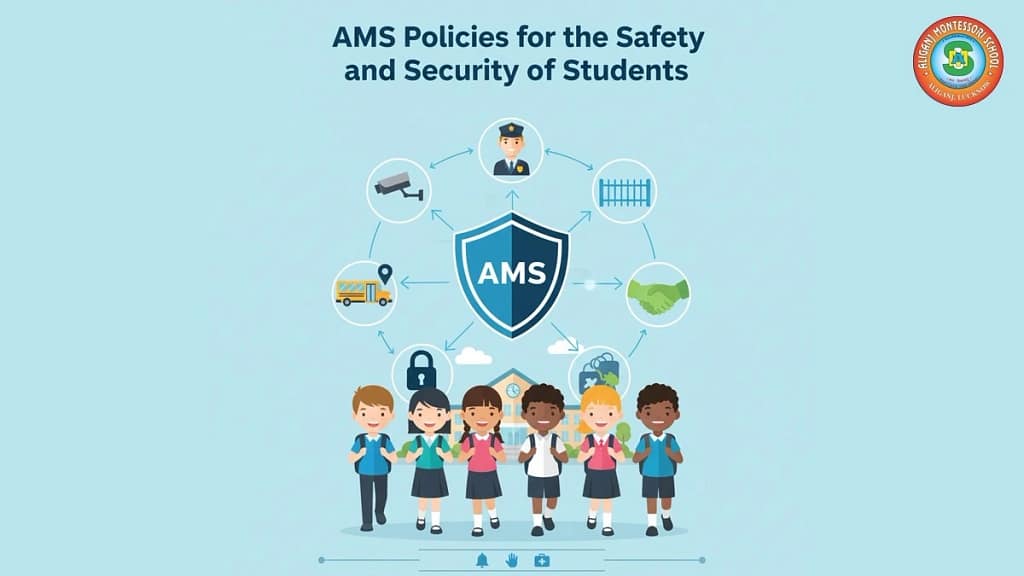
Here is a quick overview of AMS’s pillars of policy:
- Physical access control & surveillance
- Digital safety & cybersecurity
- Student wellness & behavioural culture
- Emergency preparedness & crisis management
- Continuous improvement & community engagement
All of the above are consistent with research-based best practices in student safety.
FAQs — AMS Student Safety & Security Policies
1. What safety measures does AMS have for student entry and exit?
AMS employs controlled entries, visitor identification, staff ID badges, and surveillance systems to provide only authorized access and safe drop-off/pick-up areas.
2. What is AMS doing to safeguard students online and in digital spaces?
AMS has cybersecurity measures, student digital literacy initiatives, supervised networks, reporting mechanisms for digital threats, and routine auditing to maintain digital spaces free from harm.
3. What kind of wellness support do students have at AMS?
AMS has counselling services, peer mentoring, wellness sessions, early-warning behaviour monitoring and positive-climate approach enabling emotional safety and inclusion.
4. How frequently does AMS perform emergency drills?
AMS performs regular drills such as fire, lockdown, evacuation and reunification. Situations change by time of day and place to develop preparedness and strength.
5. Are students able to report safety issues at AMS?
Yes — AMS has effective reporting mechanisms (anonymous where appropriate), threat-assessment groups, and student involvement in safety committees to express concerns and promote enhancements.
6. How are AMS’s safety policies addressed and updated?
AMS regularly performs safety audits, risk analyses, staff training, student/parent feedback and post-incident reviews in an attempt to continually improve safety measures.
7. How involved are parents in AMS’s student safety policy?
Parents at AMS are involved through communication channels, safety briefings, taking part in drills, providing feedback and supporting student well-being at home.
8. What sets AMS’s safety policy apart?
AMS policy combines physical, electronic, emotional and community elements, prioritizing comprehensive student security over a single dimension — best practices in contemporary school safety.
Conclusion
Student security and safety at AMS is essential, not discretionary. With holistic policies woven into physical facilities, online spaces, emotional well-being and emergency preparedness, AMS ensures all students can learn, develop and thrive in a secure setting. With ongoing review, stakeholder input and an ethos of awareness, AMS leads the way in producing safe and supportive learning environments.
Call to Action (CTA)
Ready to join a safe, supportive and secure learning community?
Join AMS and have your child learn in a place where safety and security matter most.